

Postpartum Anxiety Treatment in ColoradoYou thought you’d be tired.
You didn’t expect to feel this anxious.
Online or in-person postpartum therapy for Colorado moms whose brains won’t stop running the numbers - even when everyone tells them everything is fine.
You’re up for the third time tonight, going through the motions.
Change the diaper. Feed the baby. Burp. Shush. Put the baby down. Pump. Try to Sleep.
Repeat.
You are tired. So tired. And somehow, whenever you lie down, your brain won’t let you sleep.
Making decisions feels impossible because you feel like you don’t know what you are doing, or what you should do next. The worry creeps in, especially at night when the house is quiet.
You wonder…
Is the baby eating enough?
Should I wake them up?
Did we do enough tummy time today?
Is that breathing normal?
Should I call the pediatrician?
Am I supposed to know this?
You ask your mom. You text a friend. You email the pediatrician. You search Reddit at 2am looking for someone to tell you that everything is okay.
Sometimes, you actually feel okay. And then the pit in your stomach comes back and takes your breath away.
Suddenly your brain is ten steps ahead, imagining everything that could go wrong and everything you might be missing.
You wanted to enjoy this. You looked forward to this for so long.
Instead, you feel like you are constantly monitoring, researching, checking, planning, and trying to make sure you’re doing motherhood right.
And somewhere in all of that, you start to question…
Why am I struggling this much?
Am I going crazy?
I’m not depressed…so can this still be postpartum?
So to try and ease your mind - this is really hard - you are not going crazy - and yes this can still be what people call postpartum.
You also don’t have to wait for things to get worse before getting support.
Postpartum anxiety doesn’t always look like panic attacks
Sometimes postpartum anxiety is obvious. Your heart races, your chest tightens, you feel panicked or overwhelmed and you know something isn’t right.
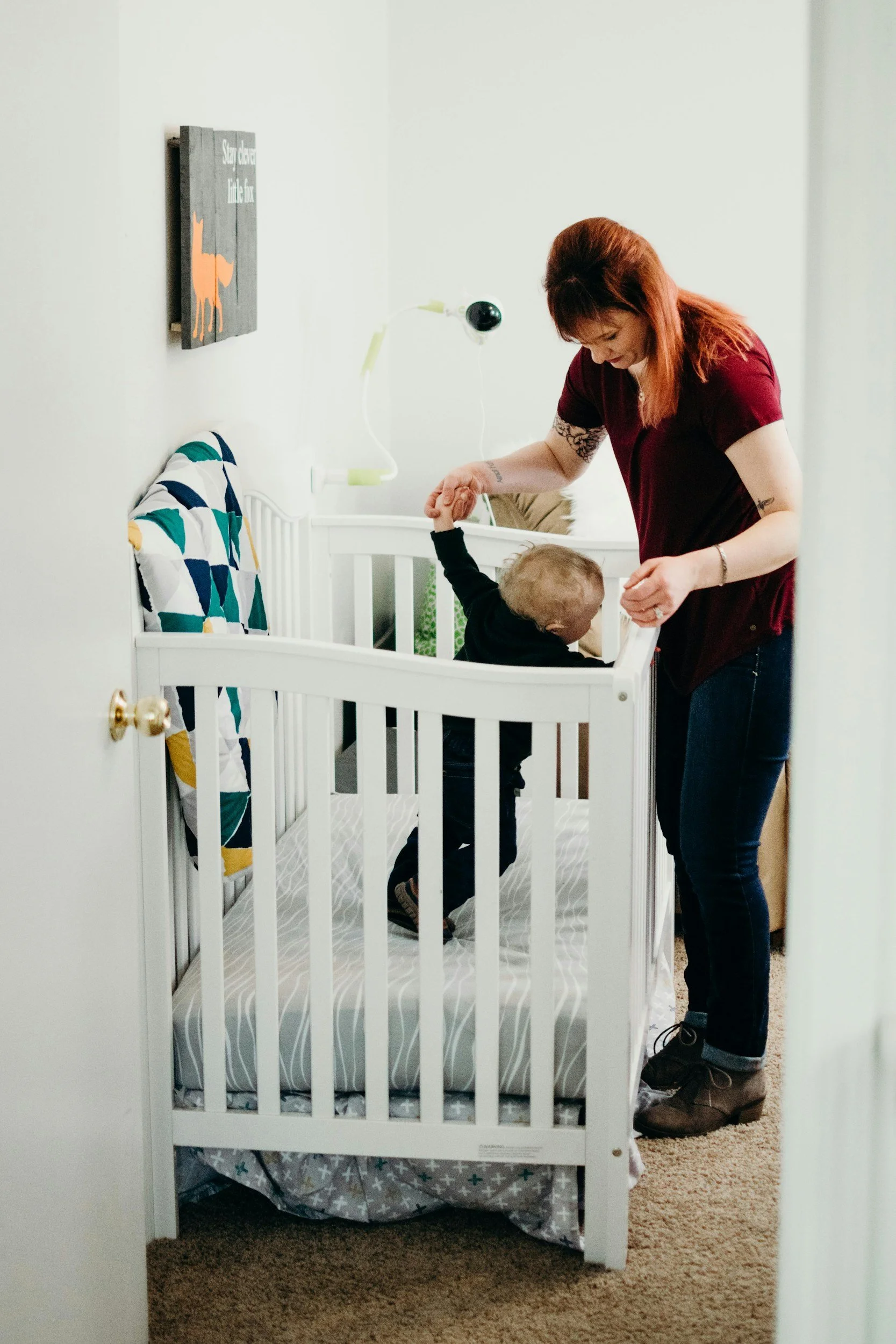
But sometimes it looks a lot more like being a really “on top of it” mom.
You research everything and replay decisions after you make them.
You constantly check whether the baby is breathing.
You have scary thoughts or images pop into your head and immediately wonder what they mean about you.
You have a hard time letting someone else care for the baby because what if they don’t notice something?
You feel like you should be sleeping when the baby sleeps, but the second the house gets quiet, your brain gets louder.
You need reassurance that everything is okay - but the relief never seems to last very long.
You might even tell yourself that this is just what
being a good mom looks like.
But there is a difference between caring about your baby and feeling like you have to be on alert every second in order to keep them safe.
That constant vigilance is exhausting.
Is this postpartum anxiety or just the baby blues?
Having a baby is a massive physical, hormonal, emotional and logistical adjustment. Feeling tearful, overwhelmed, irritable, or unlike yourself during the early postpartum period doesn’t automatically mean something is wrong.
But when your worry brain starts driving the bus, it deserves attention.
You might notice that you can’t shut your brain off even when you have the opportunity to rest. You might feel constantly on edge, need repeated reassurance, avoid situations because they feel unsafe, or find yourself stuck in intrusive “what if” thoughts.
You don’t need to figure out whether your experience is “bad enough” before reaching out. That’s something we can sort through together.
You weren’t supposed to automatically know how to be a mom.
There’s this idea that once you become a mom, some magical “maternal instinct” is supposed to kick in and suddenly you know exactly what your baby needs.
I’m calling bullshit.We are all figuring this out as we go. But anxiety takes normal uncertainty and turns it into evidence.

Our worry brain says:
If I don’t know what to do, maybe I’m not a good mom.
If I make the wrong decision, something bad could happen.
If I relax, I might miss something.
If I need help maybe I’m not cut out for this.
So you compensate by trying harder. You research more. Check more. Plan more. Think more. And eventually, the thing you’re doing to feel safer becomes the thing keeping you anxious. That’s where therapy can help.

What postpartum anxiety therapy with me looks like
Starting therapy when you already feel overwhelmed can sound like one more thing you are ‘supposed’ to do. So we won’t be adding another giant checklist to your life, and there won’t be any homework that you won’t have time to do.
There is no expectation that you show up perfectly prepared with a list of goals, or know exactly what you need. We start with what is happening for you right now.
What thoughts keep getting stuck? What situations send your anxiety through the roof? What are you doing because you genuinely want to - and what are you doing because your worry brain says you have to?
We’ll make sense of why your brain and body are reacting the way they are and figure out what actually helps you. I will not just hand you another deep breathing exercise and send you on your way (unless that’s what helps).

Together, we may work on things like:
Quieting racing and intrusive thoughts
Recognizing when your worry brain is driving the bus
Reducing the constant need to check, research, or seek reassurance
Understanding your triggers before you hit overwhelm
Building confidence in making decisions without needing %100 certainty
Communicating what you need from your partner and support system
Making space for your needs without drowning in guilt
Reconnecting with the parts of you that existed before you became “Mom”
Treatment designed for this season of your life
Treatment is personalized because postpartum anxiety doesn’t look exactly the same for every woman, and your therapy shouldn’t either.
You deserve more than a therapist who “also sees postpartum clients.”
Postpartum mental health is my specialty. I have advanced training in perinatal mental health, years of experience working with women during pregnancy and postpartum, and personal experience with what it’s like when anxiety hijacks the transition into motherhood.
So you don't have to convince me that you're struggling even though you look like you have it together. You don't have to explain why you can't “just stop Googling,” or why knowing something logically doesn't make the pit in your stomach disappear.
I get the kind of woman sitting across from me. You're capable. You're used to figuring things out. You've probably handled hard things before. And that's exactly why it can feel so unsettling when you can't seem to think your way out of this.
Therapy with me is designed specifically for that woman.

Yes, your baby can come to therapy
The idea of leaving the house after having a baby can feel like an entire event. You have to time the feeding, pack the diaper bag, find the extra outfit, get the baby into the car seat, remember whatever you inevitably forgot the first time, and somehow get yourself out the door too. It’s a lot.
That’s one of the reasons I love offering online postpartum therapy throughout Colorado.
You can show up in your sweats from your couch. If the baby needs to eat, feed them. If they’re fussing, pick them up. If you’re nap trapped, we’ll work around it.
Your baby is always welcome. Therapy doesn’t require you to pretend that you aren’t actively parenting while we talk.
Sometimes just having somewhere to put it helps
One of the things I hear most often from moms is that starting therapy itself brings some relief. Because suddenly there is somewhere to put all of it.
The thoughts you're afraid to say out loud.
The resentment you feel guilty admitting.
The fears that sound ridiculous when you hear yourself say them.
The grief of your old life.
The moments when you love your baby more than anything and also desperately want five minutes where nobody needs you.
You don’t have to clean up any of that before brining it into therapy.
I understand postpartum anxiety professionally - and I also understand how disorienting it can be to become a mom and suddenly not recognize your own brain.
You are allowed to talk about all of it here.
What getting better can actually look like
The goal isn’t to make you stop worrying about your baby. You’re their mom, that would be weird, and you are going to worry sometimes. The goal is for worry to stop making every decision.
✓ Waking up without immediately running through everything that could go wrong that day.
✓ Handing the baby to someone you trust and actually letting yourself take a break.
✓ Falling asleep without replaying the entire day.
✓ Doing something just for yourself without spending the whole time feeling guilty about it.
✓ Making a parenting decision without researching it for another hour afterwards.
✓ Noticing an intrusive thought and thinking “there goes my brain again,” instead of spiraling.
✓ Communicating that you’re overwhelmed before you explode.
✓ Being with your baby and actually being there, instead of constantly monitoring for the next problem.
And maybe most importantly: trusting yourself again.Because you didn’t stop being a person when you became a mom - even if it feels like you disappeared somewhere underneath the feedings, appointments, laundry, Googling, and mental load.
Therapy can help you find her again.
Motherhood will still be hard sometimes
Therapy doesn’t turn motherhood into a highlight real. There will still be sleepless nights, days when the baby won’t stop crying, you haven’t showered, everyone needs something from you, and you are absolutely done. There will still be moments when you question yourself.
The difference is that those moments no longer have to become proof that you’re failing.
A hard day can just be a hard day. Not evidence that you’re a bad mom. Not a reason to research everything you did wrong. Not the beginning of another spiral. Just a hard day. And tomorrow, you get to try again.
Ready to turn down the mental noise?
You don’t have to wait until postpartum anxiety becomes unbearable before asking for help.
STEP ONE
Schedule a free 20-minute virtual consultation so we can talk about what’s been happening and see if we’re a good fit.
STEP TWO
Meet with Annika Papke, postpartum anxiety specialist, for your first postpartum therapy appointment.
STEP THREE
Start turning down the worry, rebuilding trust in yourself, and making space to actually experience motherhood instead of constantly bracing your way through it.
You can love your baby deeply and still be struggling.
Both things can be true.